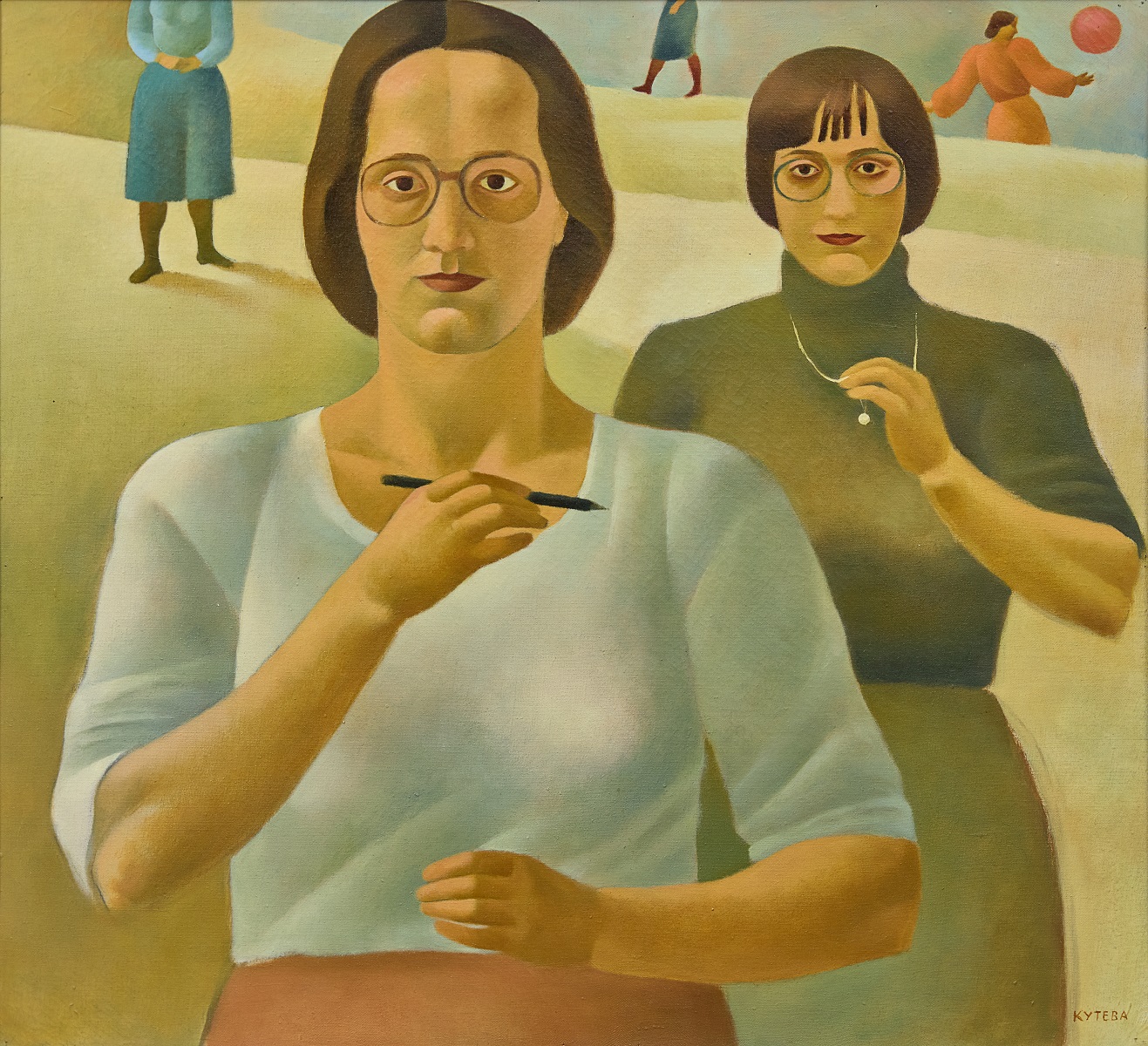



NADEZHDA KUTEVA. PLACES AND RITUALS
19.03 - 25. 05 2026
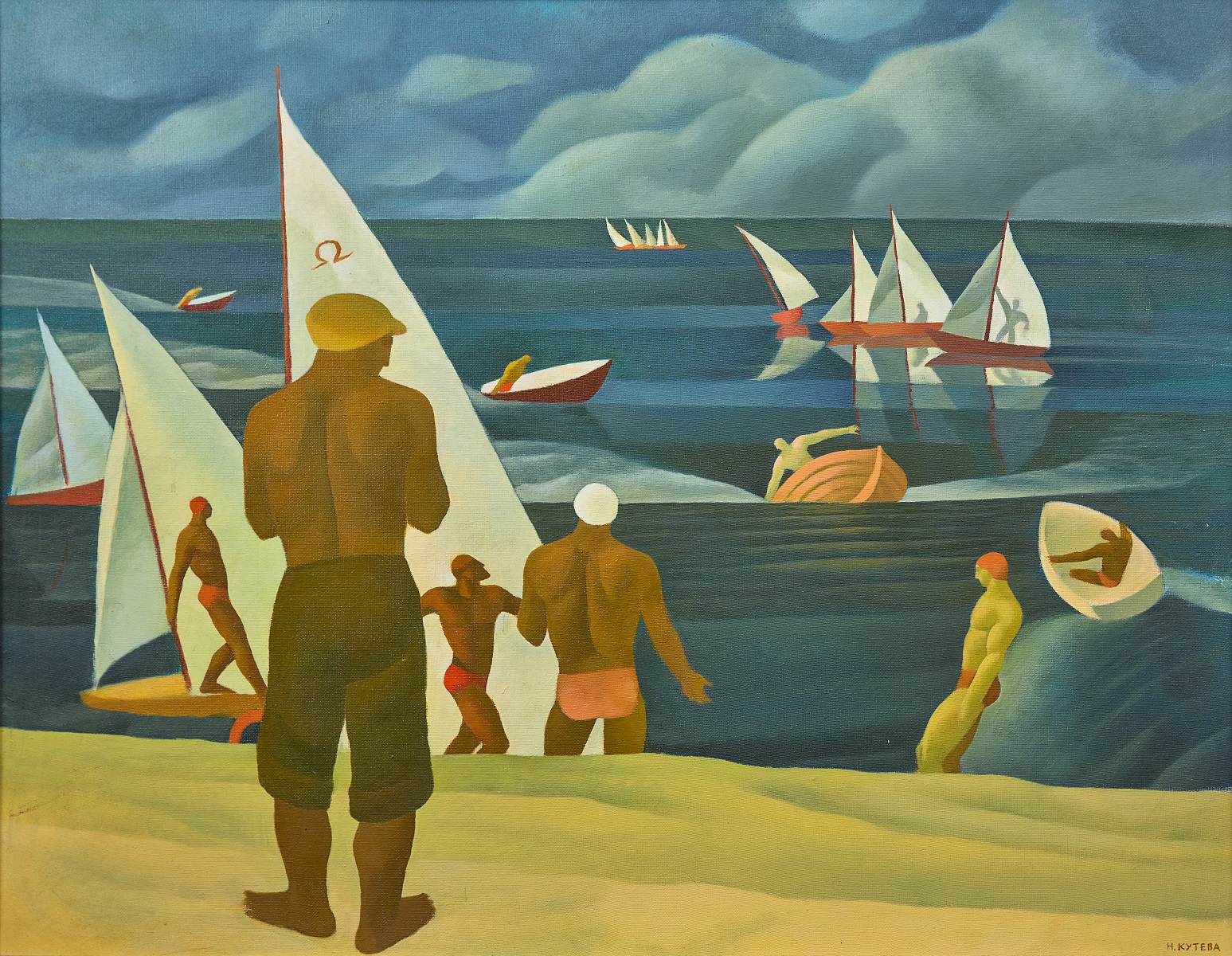
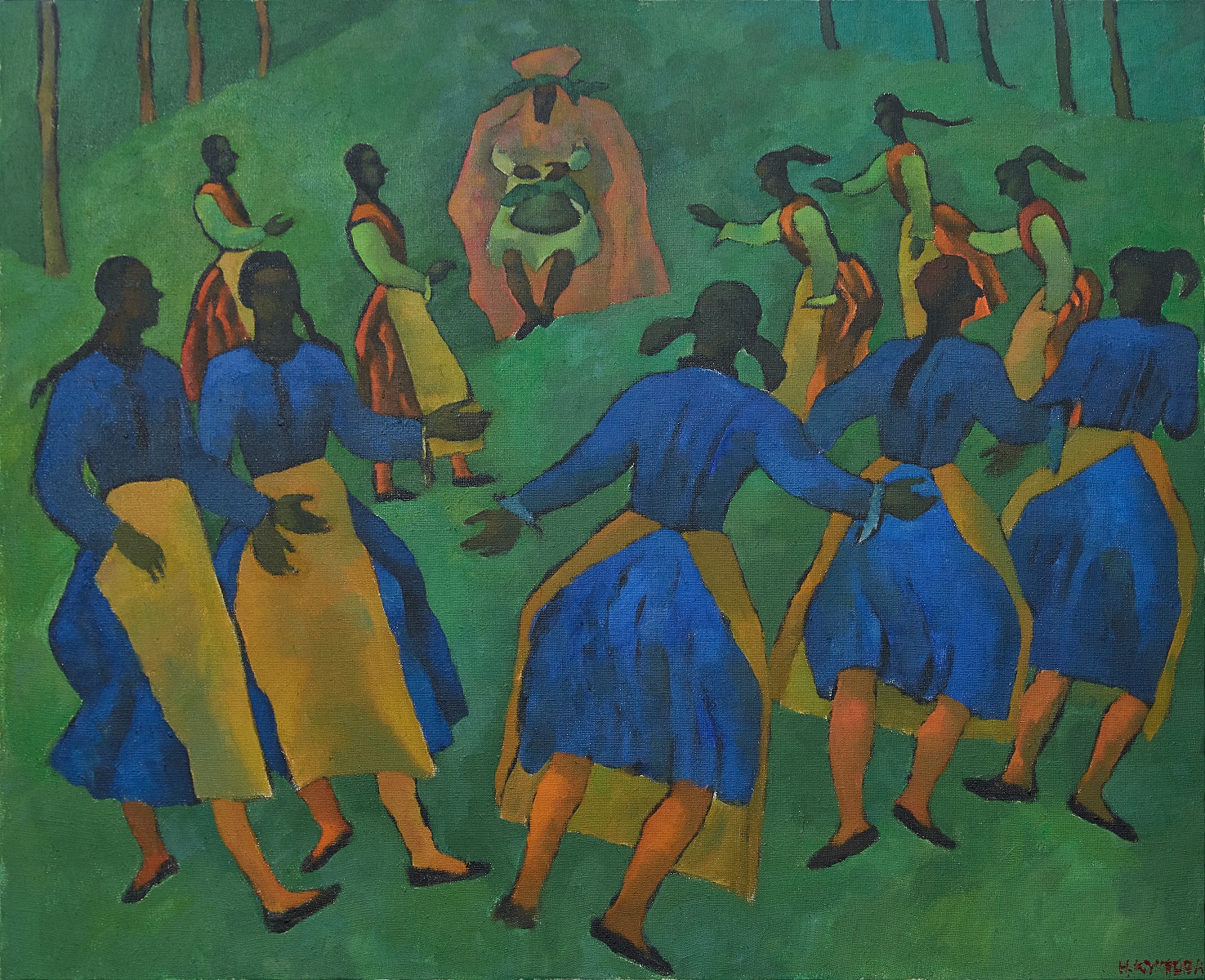
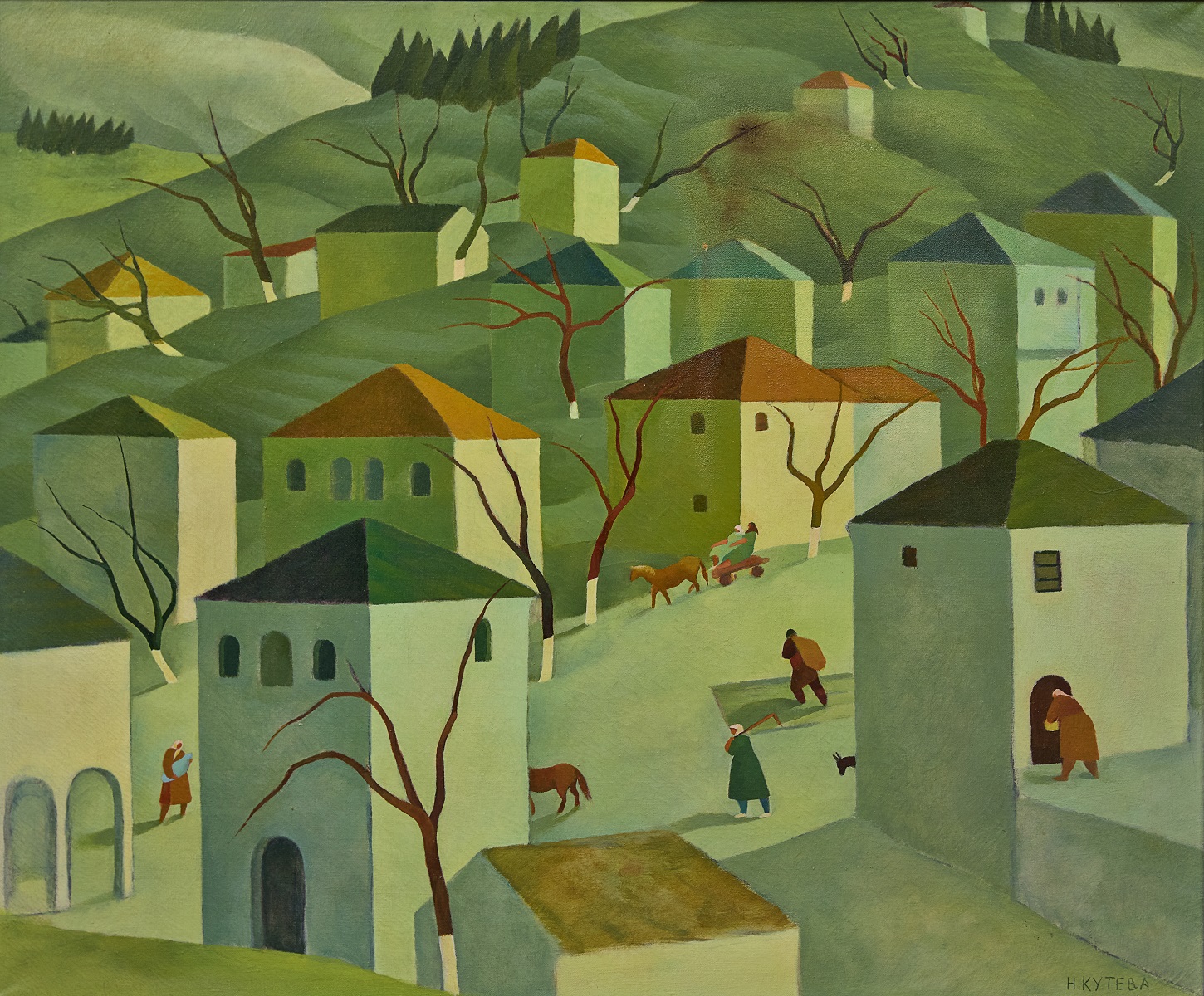
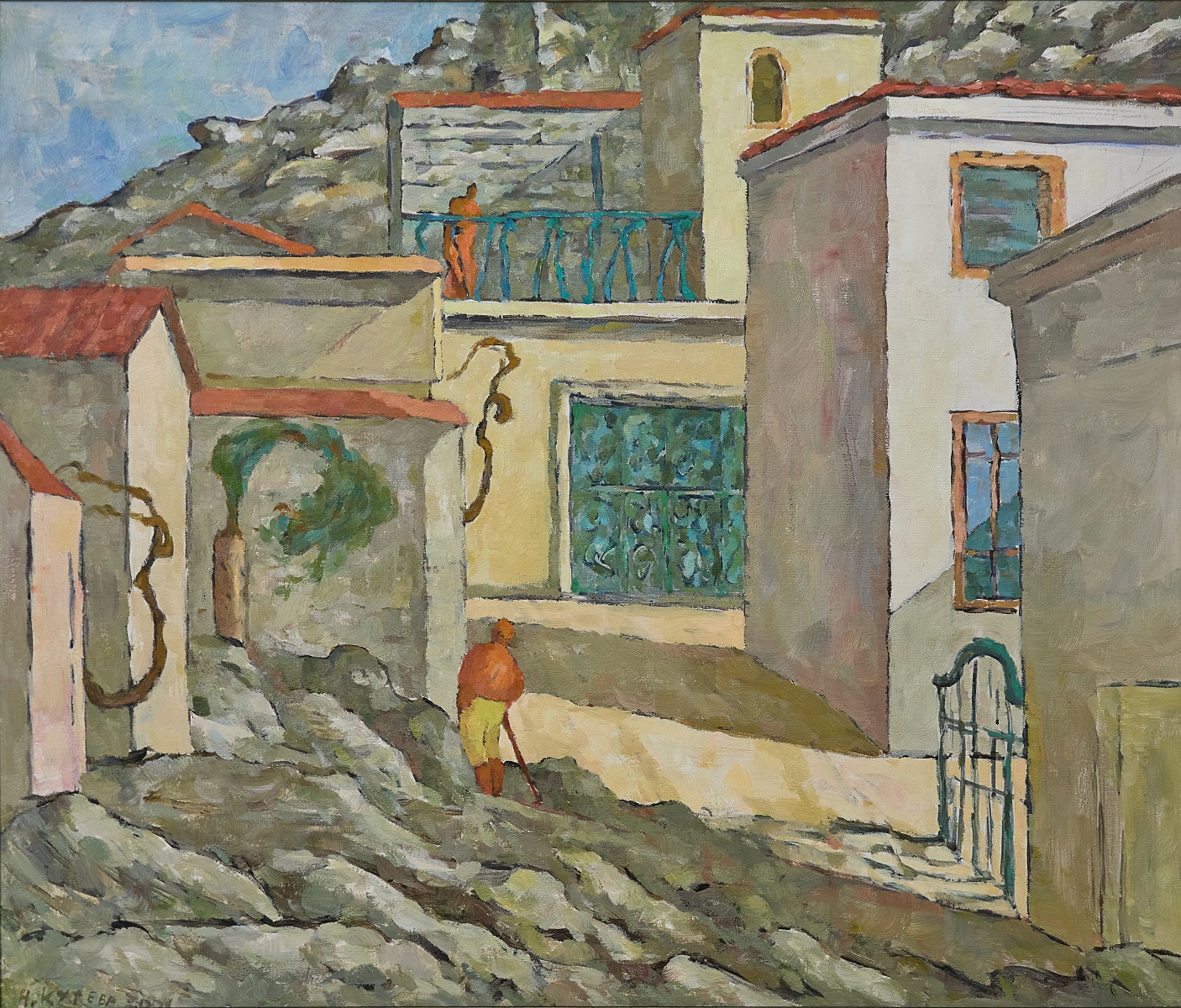
The exhibition Places and Rituals traces the development of the two main strands in Nadezhda Kuteva’s oeuvre, from her graduation from the National School of Fine Arts in 1964 to her final works. Almost everyone who writes about her work, in an attempt to identify its distinctive character, repeats the word “rhythm.” She herself says:
I strive for my paintings to have a conceptual and visual correspondence with ideas that may stem from music or the spoken word. For example, in Rhodope songs, the melody is smooth, monophonic, and so on. I try to convey this in an image through the clean lines and silhouettes of the figures, while also achieving a clear rhythm. My main guiding motif is the balance of compositional elements, as well as the rhythm of volumes in space. I would like to fill the small plane of the painting with a clear rhythm.
Brought together from various collections, the paintings in this exhibition reveal an artist who not only recreates her sense of nature and atmosphere, but also succeeds in rendering melody. Whether she is painting figures on the seashore or among the hills of the Rhodope Mountains, lazarki, scenes from the life of St Nicholas, nestinari, saints descended from the walls, or women with prams in the park, all are depicted as participants in their own strange, exalted, and humble ritual. When she chooses to immerse herself in the waters of folk tradition, Nadezhda Kuteva travels through time, for folklore is a concentration of an infinitely extended temporality and a code for penetrating the essence of the native.
Nadezhda Kuteva was born into the family of Filip Kutev— a composer, conductor, and folklorist—and Maria Kuteva, a music educator. She graduated in Mural Painting from the National Academy of Art in 1971, after which she turned to easel painting. She has participated in numerous national and international exhibitions and has presented her work in more than twenty solo exhibitions. She is the recipient of a number of awards, including those of the Slovak Artists’ Association, Košice (1977), the Zlatyu Boyadzhiev Award (1986), the Vladimir Dimitrov–Maystora Award (1990), and the Zahari Zograf Award (2022).